




Beyond Safety: How Memory-Safe Languages Cut Cost and Risk in Embedded Software
This webinar turns the findings of the VDC Strategy report, Memory-Safe Languages Offer Protection for Devices and TCO, into a live thought-leadership session for engineering leaders.
Memory-safety vulnerabilities remain one of the largest sources of software defects, and the language you choose has consequences that reach far beyond safety. In this webinar, VDC Strategy shares findings from a survey of more than 500 embedded software decision-makers, revealing how memory-safe languages such as Ada, SPARK, and Rust affect not only safety and security but also development costs, schedule adherence, and long-term maintenance.
AdaCore Chief Product Officer, Quentin Ochem, will then translate the data into practice: what memory safety looks like in real safety-critical projects, how it supports certification, and why it is becoming the foundation for trusting AI-generated code.
This webinar will cover the topics of:
- Memory safety as a strategic priority
- The future of software development
- The evolution of programming language choice
- How to reduce development and lifecycle costs
Chris Rommel will discuss the data from an analytical perspective, and Quentin Ochem will apply it to strategic business situations.
Join us to see why language choice is now a board-level business decision, and what the numbers say about getting it right.
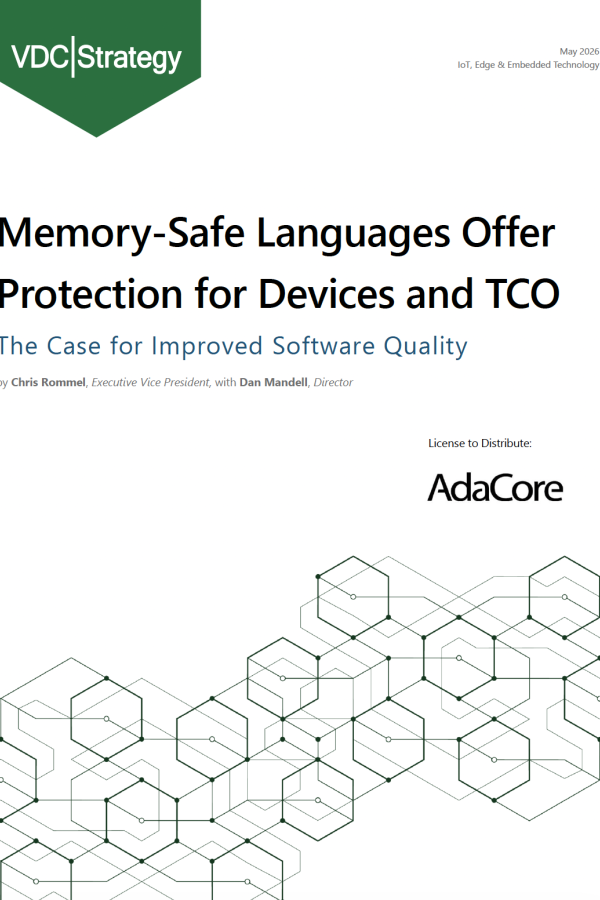
Memory-Safe Languages Offer Protection for Devices and TCO
85% of engineers say programming language choice directly impacts safety and security, and regulators are taking note. This independent report from VDC Strategy, based on a survey of 500+ embedded engineering decision-makers, examines why memory-safe languages like Ada, SPARK and Rust have become the leading choice for safety-critical development, and what that means for your risk, schedule and bottom line.
Register
Having trouble viewing or submitting this form? Please reach out to us directly at info@adacore.com and we'll be happy to assist you.