


Getting Started in Functional Safety with Rust
Expert-Led Rust Training for Safety-Critical Teams
Your engineers already know C and C++. Here's how to bridge the skill gap from C/C++ to Rust.
Rust is increasingly appearing in conversations in the world of functional safety. If you're working under DO-178C, ISO 26262, or IEC 61508 safety regulations, that conversation is coming for your team if it hasn't already.
The problem isn't motivation, and your engineers are capable. The problem is that you need to get them productive in Rust without stalling your program. An unstructured ramp-up to a new language mid-program is a schedule risk you can't afford.
AdaCore's Rust for Functional Safety training is designed for exactly this situation: experienced C/C++ developers who need to get up to speed on Rust in the context of safety-critical development. Not a generic intro course. Instructor-led, hands-on, and built around what actually matters for certified systems: ownership and borrowing, memory safety, concurrency, and the cargo build environment.
AdaCore has spent three decades building toolchains, compilers, and development environments for the most demanding high-integrity software programs in the aerospace, defense, automotive, and medical industries. That depth of experience shapes how this course is taught, not just the language mechanics, but what Rust means in a real certification context, where the tradeoffs are, and how to make it work inside a regulated program.
Walk away ready to start a functional safety program in Rust, or run a proof of concept before you commit to the full program.
If Rust is on your roadmap for the next 18 months, this is the right time to build the capability before schedule pressure kicks in.
Register your interest here.
Author
Mark Hermeling
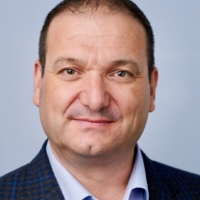
Mark has over 25 years’ experience in software development tools for high-integrity, secure, embedded and real-time systems across automotive, aerospace, defence and industrial domains. As Head of Technical Marketing at AdaCore, he links technical capabilities to business value and is a regular author and speaker on on topics ranging from the software development lifecycle, DevSecOps to formal methods and software verification.