




Academia Highlights
University of Virginia (USA)
ECHO: A Practical Approach to Formal Verification
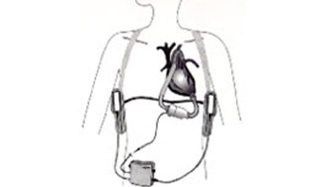
At the University of Virginia, Ada lies at the core of a comprehensive approach to creating software for safety-critical applications. Dr. John Knight and his student, Xiang Yin, have created a practical approach to formal verification called Echo. In Echo verification, a program written in SPARK Ada is verified to conform to its SPARK annotations using the SPARK tools.

The Australian National University (Canberra, Australia)
Serafina Autonomous Mini Submersible
At the Australian National University (ANU), Ada plays an integral part in teaching and research, at both the undergraduate and graduate levels. Dr. Uwe Zimmer has been using Ada, with the GNAT technology on Linux, Windows, Mac, and Embedded MPC5554, in two major courses: Concurrent and Distributed Systems, for Computer Science and Engineering students in their second year; and Real-Time and Embedded Systems, for Computer Science and Engineering students in their last year and for Masters students.
Vermont Technical College (USA)
Arctic Sea Ice Buoy and CubeSat Projects
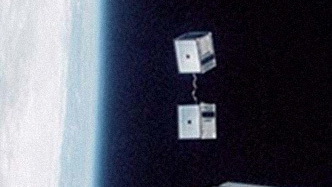
Under the direction of Professors Carl Brandon and Peter Chapin, students at Vermont Technical College are using AdaCore’s GNAT development environment along with Praxis’ SPARK tools on two NASA-sponsored programs with large software components.
Mälardalen University (Västerås, Sweden)
Dasher! – A Racing Robot in Ada
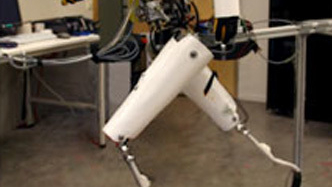
Under the direction of Professor Lars Asplund, graduate students at Mälardalen University are designing, building and programming the Dasher robot in a project that is pushing the limits of robotics technology. The software is being developed with AdaCore’s GNAT toolset, furnished to the university under the GNAT Academic Program (GAP), on Wind River Systems’ VxWorks real-time operating system.